The History of Sarnath
Sarnath, historically known as Isipatana (the place where holy men landed) and Mrigadava (Deer Park), holds an incredibly revered place in world history. Following his spiritual enlightenment under the Bodhi tree in Bodh Gaya, Siddhartha Gautama traveled across the plains to find his five former companions here.
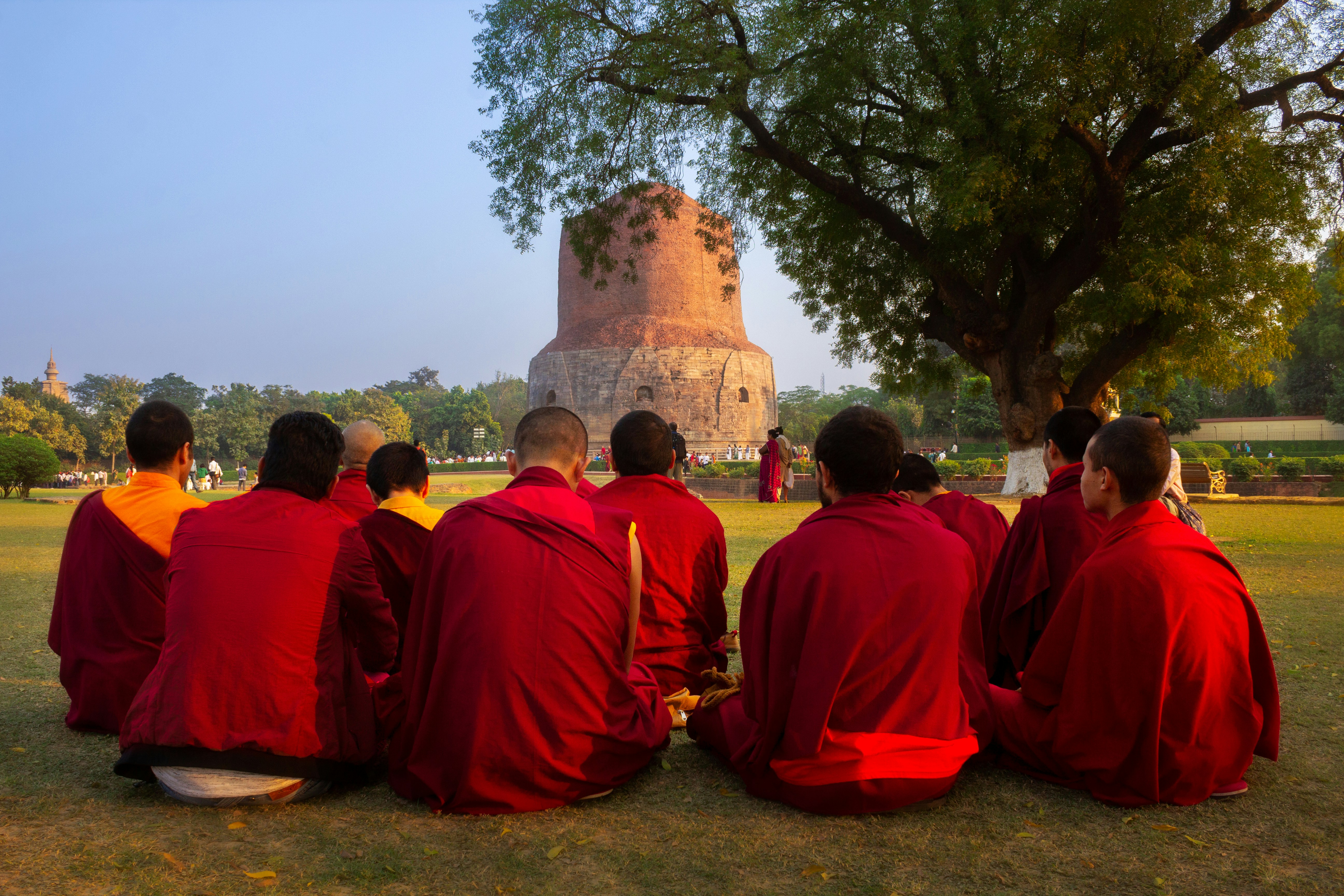
It was in the quiet groves of Sarnath in 528 BCE that Lord Buddha delivered his monumental first sermon, an event famously recognized across ancient traditions as **Dharmachakkapavattana**—the "Turning of the Wheel of Cosmic Law." This singular moment laid the functional foundation of the global Buddhist order (the Sangha).
The Importance of Sarnath
Sarnath stands proudly as one of the Four Primary Pilgrimage Sites decreed by Lord Buddha himself for his disciples (alongside Lumbini, Bodh Gaya, and Kushinagar). It marks the birth of the Buddhist Triad: the Buddha (The Teacher), the Dharma (The Teachings), and the Sangha (The Monastic Community).
The Four Noble Truths
It was here that the basic tenets of Buddhism were first articulated: The truth of suffering (Dukkha), its cause (Samudaya), its cessation (Nirodha), and the path leading to liberation (the Eightfold Path or Ashtangika Marga).
Sacred Monuments & The Ashoka Pillars
The archaeological expanse of Sarnath features majestic monuments raised by emperors and kings to commemorate the cosmic footsteps of the Buddha.
Dhamek Stupa
The defining silhouette of Sarnath, this massive cylindrical stone and brick structure stands over 43 meters high. Built originally by Emperor Ashoka and modified during the Gupta period, it precisely points out the spot where Buddha gave his first teaching.
The Ashoka Pillar & Capital
Sarnath houses the broken foundations of the legendary Ashoka Pillar. The canopy that once crowned it—the **Lion Capital of Ashoka**—features four majestic back-to-back Asiatic lions. This historic masterpiece was officially adopted as the National Emblem of India, and its central wheel sits at the center of India's national flag.
Chaukhandi Stupa
Located slightly ahead of the main ruins, this lofty terraced brick mound topped by an octagonal Mughal tower marks the exact location where Lord Buddha originally met his five first disciples upon entering Sarnath.
Location & Distances from Important Hubs
Sarnath is a peaceful, green enclave located in the northern periphery of the Varanasi district in Uttar Pradesh, India. It offers a quiet, meditative escape from the highly energetic, bustling environment of the core old city lanes.
Distances from Major Transit Points
- Varanasi Junction (Cantt Station): ~6.5 Km (approx. 20-25 mins drive)
- Sarnath Railway Station (Local hub): ~1.0 Km (5 mins)
- Lal Bahadur Shastri Airport (VNS): ~24 Km (approx. 45-55 mins via NH31)
Distances from Core Spiritual Sites
- Kashi Vishwanath Temple / Corridor: ~10 Km (approx. 35 mins via local auto/cab)
- Dashashwamedh Ghat (Main Aarti Ghat): ~11 Km (approx. 40 mins)
- Assi Ghat: ~13 Km (approx. 45 mins)
💡 Practical Visiting Tips
Operating Hours: The archaeological ruins and Deer Park are open from sunrise to sunset daily.
The Museum: Do not miss the adjacent Sarnath Archaeological Museum (Closed on Fridays) to view the original Lion Capital and spectacular masterwork stone sculptures of the Buddha from the Gupta Empire.