The Spiritual Philosophy of Moksha
In Hindu theology, Varanasi (Kashi) is not merely a geographic location; it is the threshold between the material world and cosmic liberation. Central to this belief are the city's active cremation ghats. Unlike Western or mainstream modern perspectives that view death with fear and aversion, Hindu tradition perceives death at Kashi as a glorious celebration of final freedom.
It is believed that those cremated along the banks of the holy river Ganga in Kashi achieve Moksha—immediate liberation from the grueling, endless loop of rebirth and cosmic transmigration (Samsara). Devotees believe that as a soul passes away here, Lord Shiva himself whispers the sacred Taraka Mantra into the ear of the deceased, clearing all earthly karmic debts instantaneously.
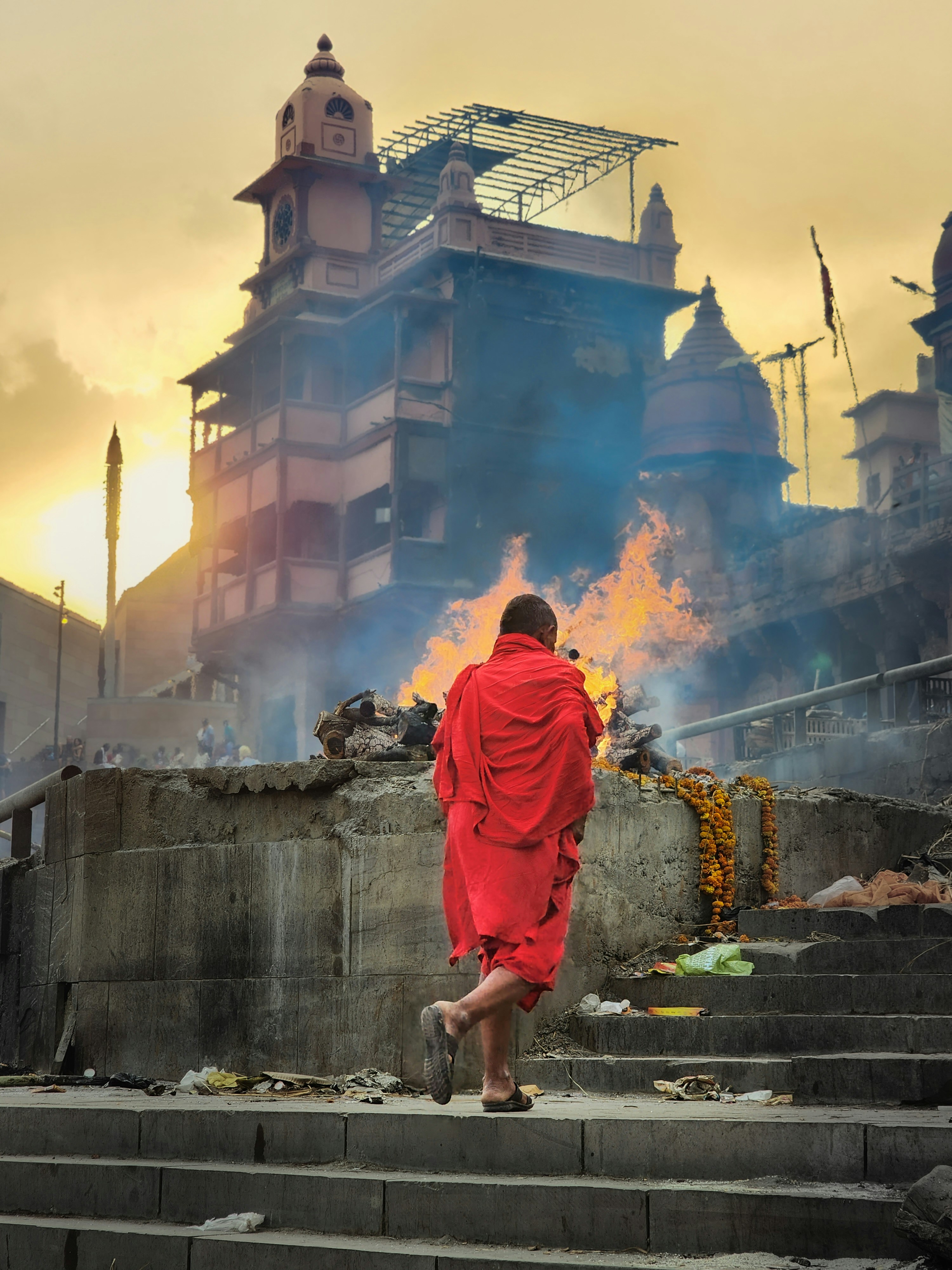
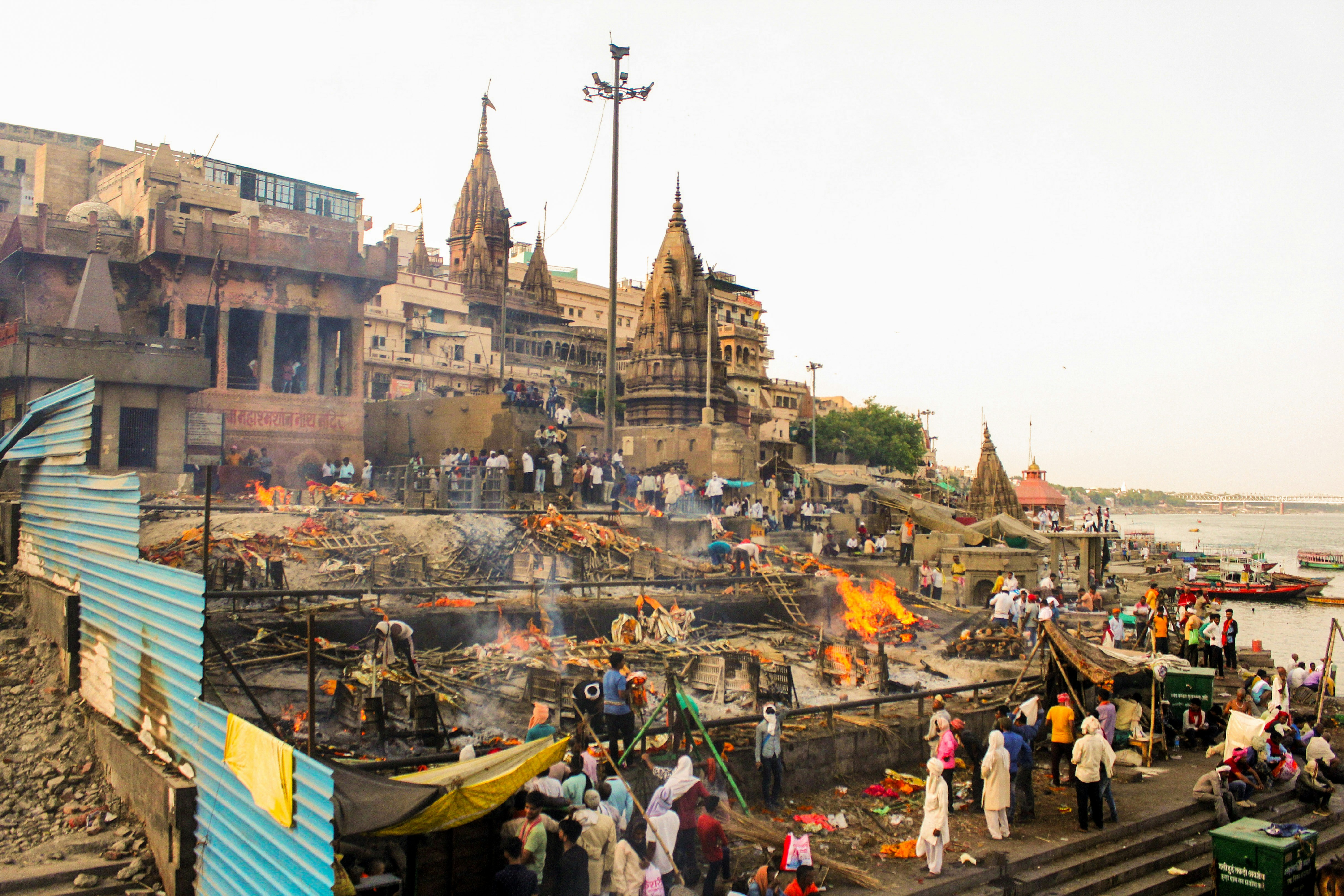
Manikarnika Ghat: The Great Cremation Ground
Revered as the primary and most sacred cremation site in Varanasi, Manikarnika Ghat is a place where the funeral pyres have burned continuously, day and night, for thousands of years without extinguishing.
History & Mythology
According to legend, Lord Vishnu dug a sacred well here (the Manikarnika Kund) for Lord Shiva and Goddess Parvati to bathe in. While meditating, an earring (Manikarnika) belonging to Shiva fell into the well, forever consecrating the soil. Another lore says Goddess Sati's ear ornament fell here during Shiva's cosmic dance of grief.
The Living Reality
Manikarnika acts as the starkest reflection of mortal reality. Dozens of cremations occur here daily. The operations are managed by a specialized lineage known as the Dom Raja family, custodians of the sacred fire used to light every single funeral pyre.
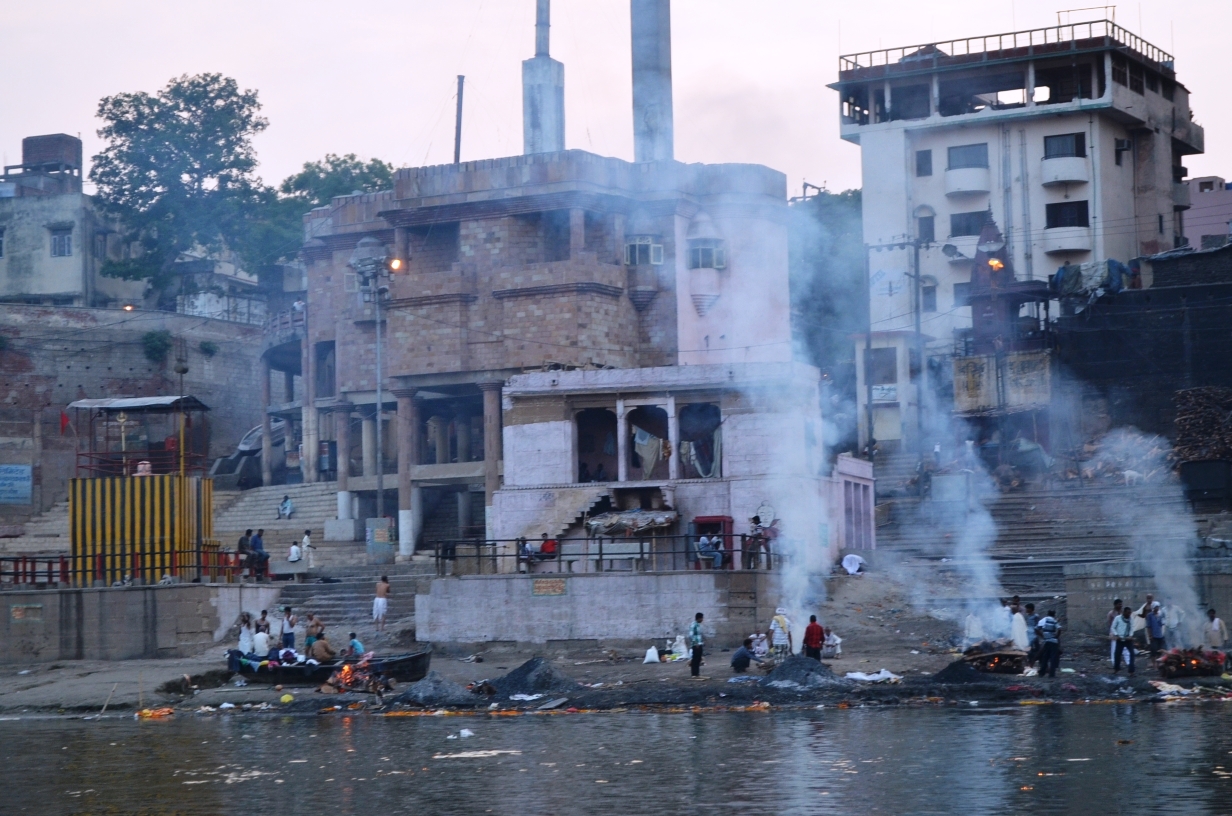
Harishchandra Ghat: The Bastion of Truth
Slightly further south along the riverfront sits Harishchandra Ghat, another highly important and ancient cremation ground. While smaller and typically quieter than Manikarnika, it holds an equally profound spiritual status.
The Legend of King Harishchandra
This ghat is named after the legendary King Harishchandra, renowned in ancient texts for his absolute devotion to truth and righteousness. To honor his vows, the king gave up his kingdom, family, and wealth, eventually working as a humble laborer at this very cremation ground. Due to his unwavering adherence to truth despite extreme hardship, gods blessed this ground, proclaiming that anyone cremated here would automatically attain heavenly liberation.
Today, Harishchandra Ghat blends ancient heritage with modern infrastructure, featuring a functional electric crematorium built alongside the traditional open-air wooden pyres to provide eco-friendly alternatives to pilgrims.
Advice for Foreign Tourists
Visiting the cremation ghats can be an incredibly profound, perspective-shifting experience, but it can also feel intense or overwhelming due to the open nature of the ceremonies. Understanding the context helps transform shock into deep cultural respect.
Understanding the Atmosphere
There is no frantic weeping or outward hysteria at the ghats. In Hindu belief, mourning too loudly is thought to hinder the soul's peaceful journey outward. The atmosphere is solemn, focused, and matter-of-fact—treating death as an ordinary, natural transition.
The Boat Perspective
For international travelers who feel uncomfortable walking directly into the crowded alleys of the cremation grounds, viewing the ghats from a respectful distance during a sunrise or sunset boat ride along the Ganga is highly recommended.
Important Guidelines for Visitors
Because these are active, living places of mourning rather than simple tourist attractions, strict adherence to local customs is expected from all domestic and foreign travelers:
- Strictly No Photography: Taking pictures or videos of the funeral pyres, wrapped bodies, or grieving families is deeply offensive. Keep your cameras and phones tucked away entirely out of respect.
- Beware of Wood Donation Scams: A common trap involves aggressive scammers approaching tourists claiming to collect money for "poor families who cannot afford funeral wood." Politely decline and walk away; legitimate donations are never collected this way on the streets.
- Maintain Absolute Silence: Speak in low whispers. Avoid loud laughter, casual socializing, or disrupting the paths of the pallbearers carrying the deceased to the water.
- Dress Modestly: Wear simple clothing that covers your shoulders and knees entirely. Bright, revealing, or party attire is highly inappropriate for these grounds.
- Keep a Respectful Distance: Do not stand in areas where wood workers are stacking logs or where priests are conducting sensitive last rites near the river's edge.