Centuries of Living Traditions
Kashi, also known as Varanasi or Banaras, is widely regarded as one of the world's oldest continuously inhabited cities. Beyond its sacred temples and revered ghats, the city has flourished for centuries as a vibrant center of education, preserving Sanskrit literature, Vedic studies, philosophy, classical music, Ayurveda, astronomy, and ritual traditions through uninterrupted teacher–disciple lineages.
Traditional learning in Kashi has historically taken place in Gurukuls, Pathshalas, temples, monasteries (Mathas), and, in modern times, universities. Today, Indian and international students continue to study Sanskrit, Hindu philosophy, ritual sciences, yoga, music, and other classical disciplines under experienced scholars and Acharyas.
Ancient Kashi has long been associated with Vedic learning and later became an important center for Sanskrit scholarship. Modern institutions such as Banaras Hindu University (founded in 1916) and Sampurnanand Sanskrit University continue this educational tradition alongside numerous traditional schools and religious institutions.
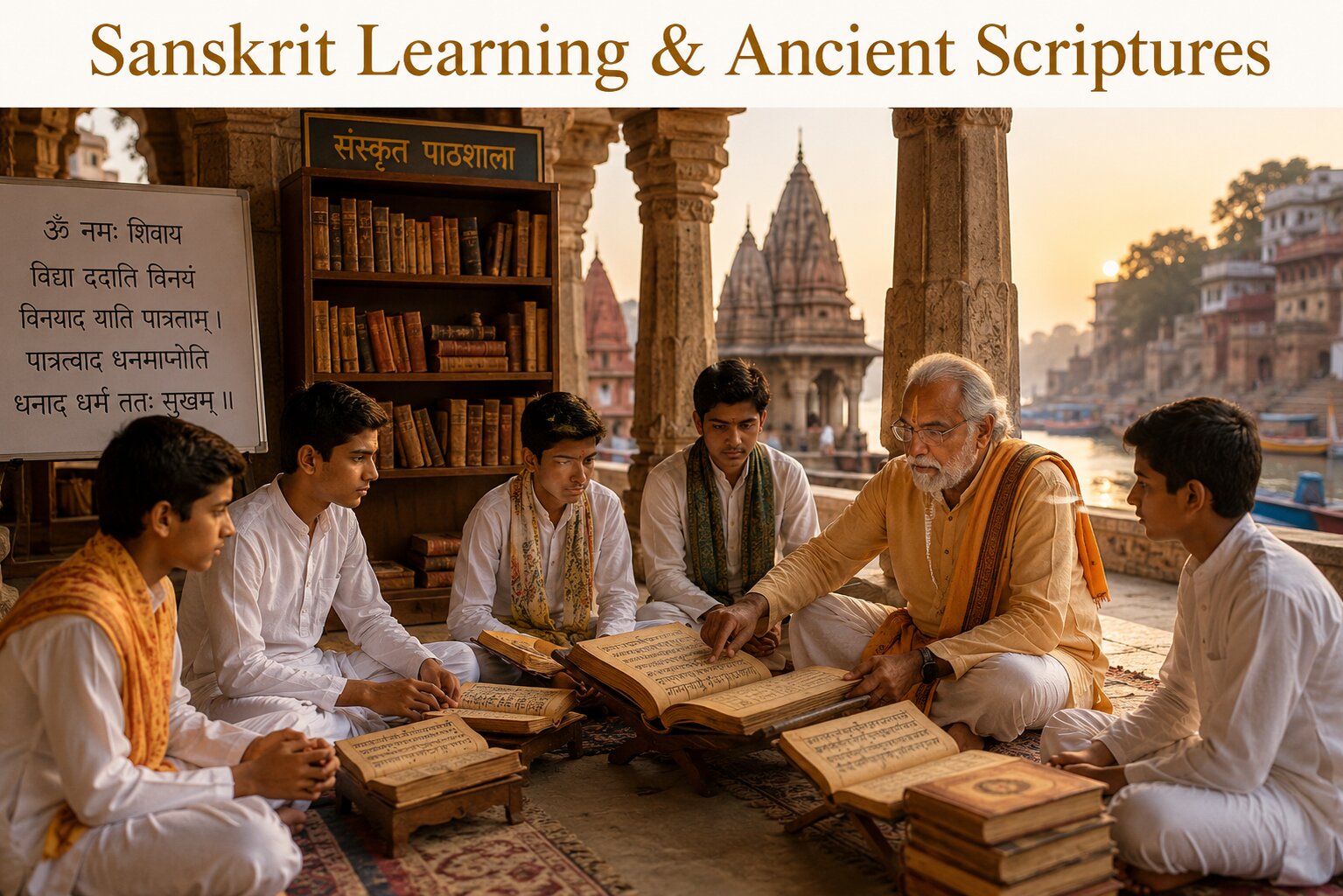
📜 Sanskrit Learning & Ancient Scriptures
For centuries, Kashi has been one of India's foremost centers of Sanskrit learning. The city has nurtured generations of scholars in Vyākaraṇa (Grammar), Vedānta, Nyāya (Logic), Mīmāṃsā, Dharmaśāstra, Jyotiṣa, and classical Sanskrit literature. Even today, students from India and abroad come to Kashi to study the language of the Vedas, Upanishads, Mahābhārata, Rāmāyaṇa, and other foundational texts of Indian civilization.
Learning traditionally follows the Guru–Shishya Parampara, where students receive direct instruction from experienced teachers through recitation, memorization, discussion, and textual interpretation.
Subjects Commonly Studied
- ✔ Sanskrit Grammar (Vyākaraṇa) | Spoken Sanskrit | Vedic Sanskrit
- ✔ Upanishads | Bhagavad Gita | Puranic Literature
- ✔ Indian Philosophy | Manuscript Reading
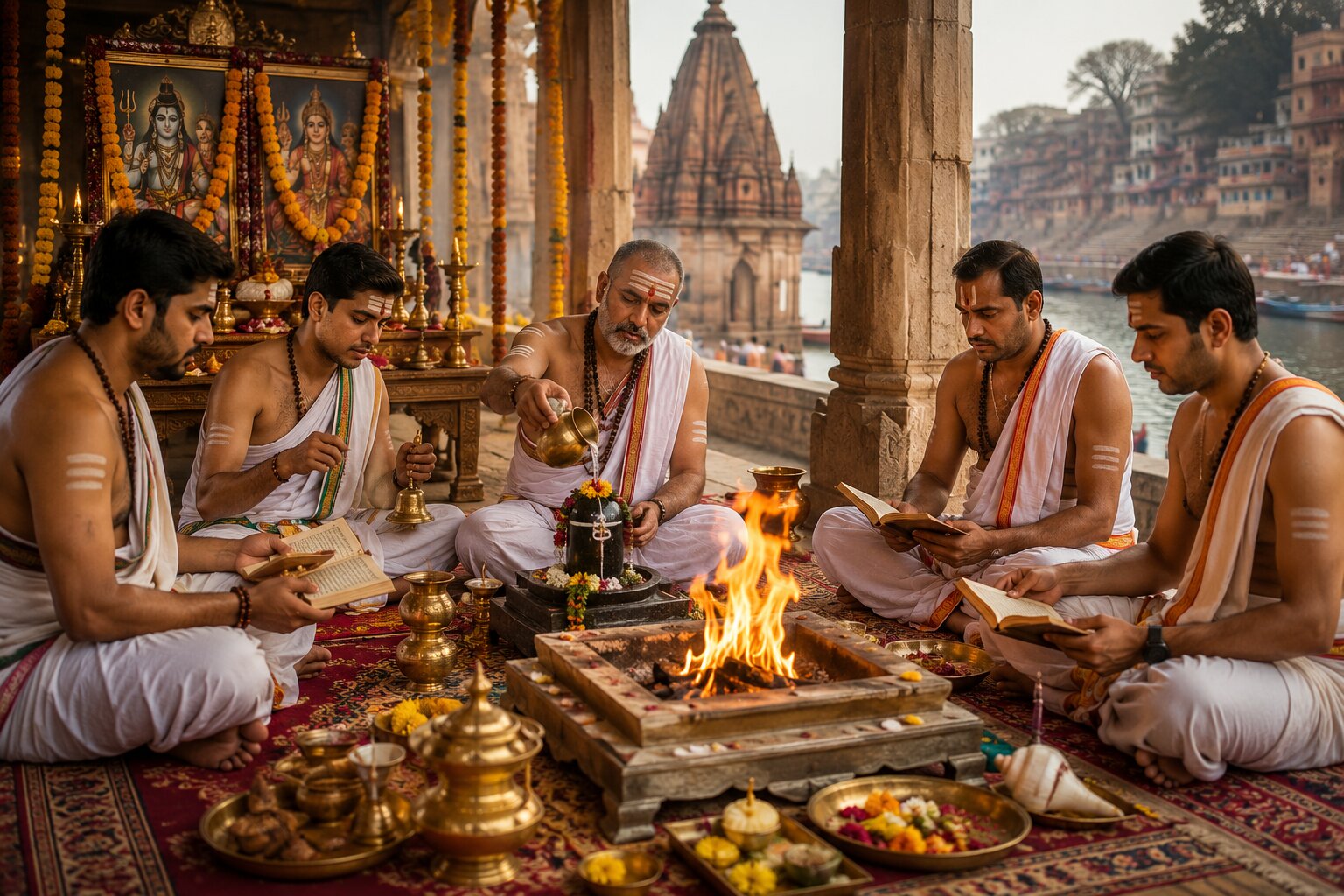
🕉 Vedic Priests & Ritual Arts
Kashi has preserved one of India's oldest continuous traditions of Vedic chanting and temple worship. The city's temples, ghats, and traditional Brahmin families have safeguarded the oral transmission of Vedic mantras through generations using precise methods of pronunciation, intonation (Svara), and memorization.
Traditional Areas of Study
- ✔ Vedic Chanting (Samhita Patha) | Rudrabhisheka Procedures
- ✔ Homa & Havan Rituals | Temple Worship (Puja Vidhi)
- ✔ Shiksha (Vedic Phonetics) | Samskaras & Ceremonies
Traditional Invocation: ॐ नमः शिवाय — Om Namah Shivaya ("I bow to Lord Shiva.")
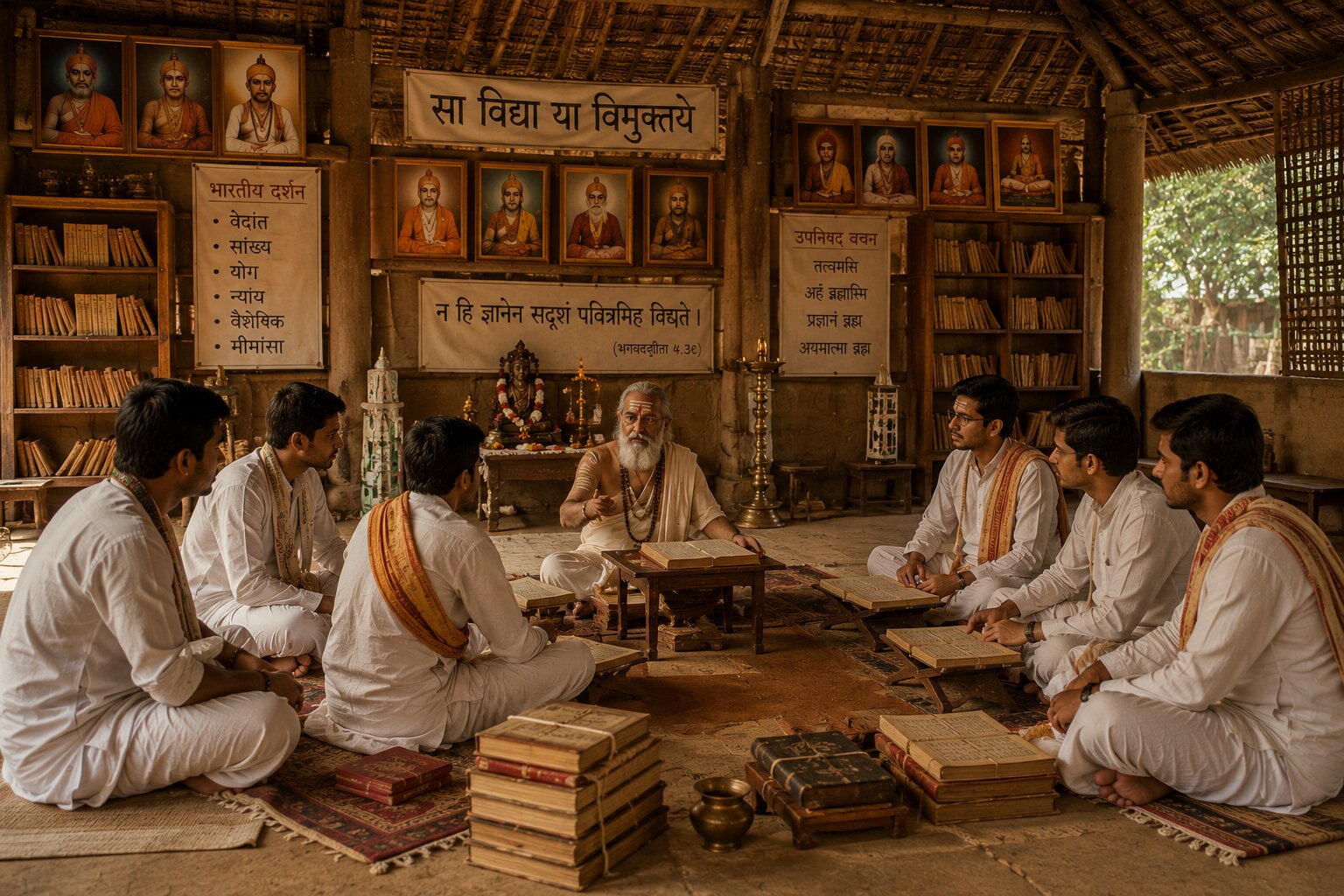
⭐ Saints, Scholars & Indian Philosophy
For centuries, Kashi has attracted philosophers, saints, teachers, poets, and spiritual seekers from across India. The city has been associated with diverse traditions of thought, including Vedanta, Nyaya, Mimamsa, Shaiva philosophy, Yoga, and Bhakti, alongside the nearby Buddhist heritage of Sarnath.
Major Areas of Study
- ✔ Advaita Vedanta | Nyaya (Logic) | Mimamsa
- ✔ Shaiva Philosophy | Bhagavad Gita Studies | Upanishadic Thought
- ✔ Bhakti Literature | Comparative Indian Philosophy
Classical Sanskrit Saying: सा विद्या या विमुक्तये — Sā Vidyā Yā Vimuktaye ("True knowledge is that which leads to liberation.")
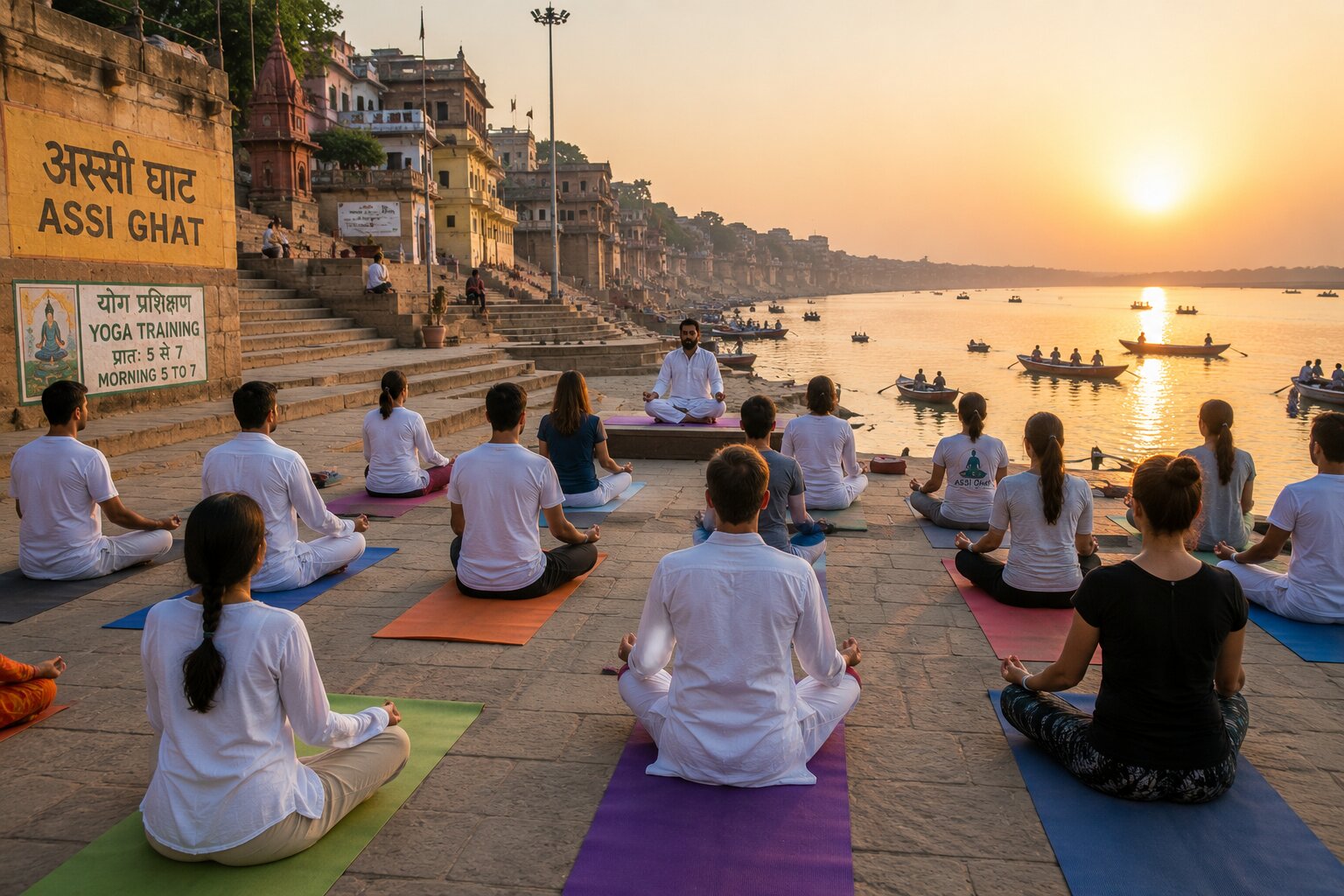
🧘 Traditional Yoga & Meditation
For centuries, Kashi has been a sacred destination for yogis, ascetics, and spiritual seekers pursuing self-realization. The traditional approach emphasizes ethical living, breath control, concentration, meditation, and spiritual discipline rather than modern fitness-oriented practices.
Areas of Study
- ✔ Hatha Yoga | Raja Yoga | Pranayama
- ✔ Meditation Techniques | Yoga Philosophy
- ✔ Patanjali Yoga Sutras | Stress Management
Bhagavad Gita (6.23): तं विद्यात् दुःखसंयोगवियोगं योगसंज्ञितम्। — Taṁ Vidyād Duḥkha-Saṁyoga-Viyogaṁ Yoga-Saṁjñitam ("Know Yoga as the state that frees one from union with sorrow.")
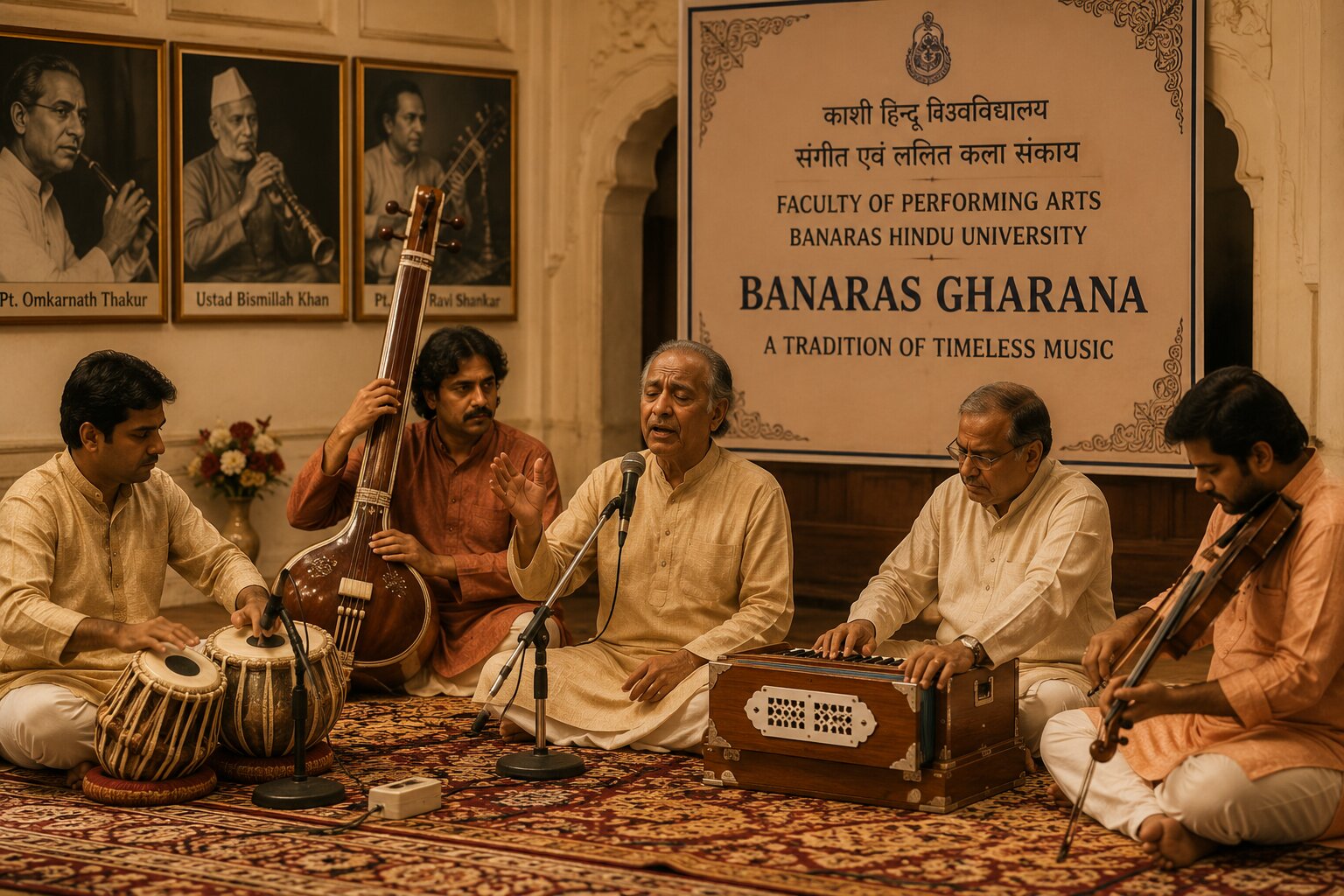
🎵 Banaras Gharana Music
Varanasi is one of India's most celebrated centres of classical music and performing arts, flourishing through the Guru–Shishya Parampara. The Banaras Gharana is renowned for expressive vocal styles, Tabla, Shehnai, Dhrupad, Thumri, and folk-classical compositions.
Areas of Study
- ✔ Hindustani Classical Vocal | Tabla | Shehnai
- ✔ Sitar | Bansuri (Flute) | Dhrupad | Thumri
Music in Indian Tradition: गीतम् वाद्यं तथा नृत्यं त्रयं संगीतमुच्यते। — Gītam Vādyaṁ Tathā Nṛtyaṁ Trayaṁ Saṅgītam Ucyate ("Vocal music, instrumental music, and dance together constitute the complete art of music.")
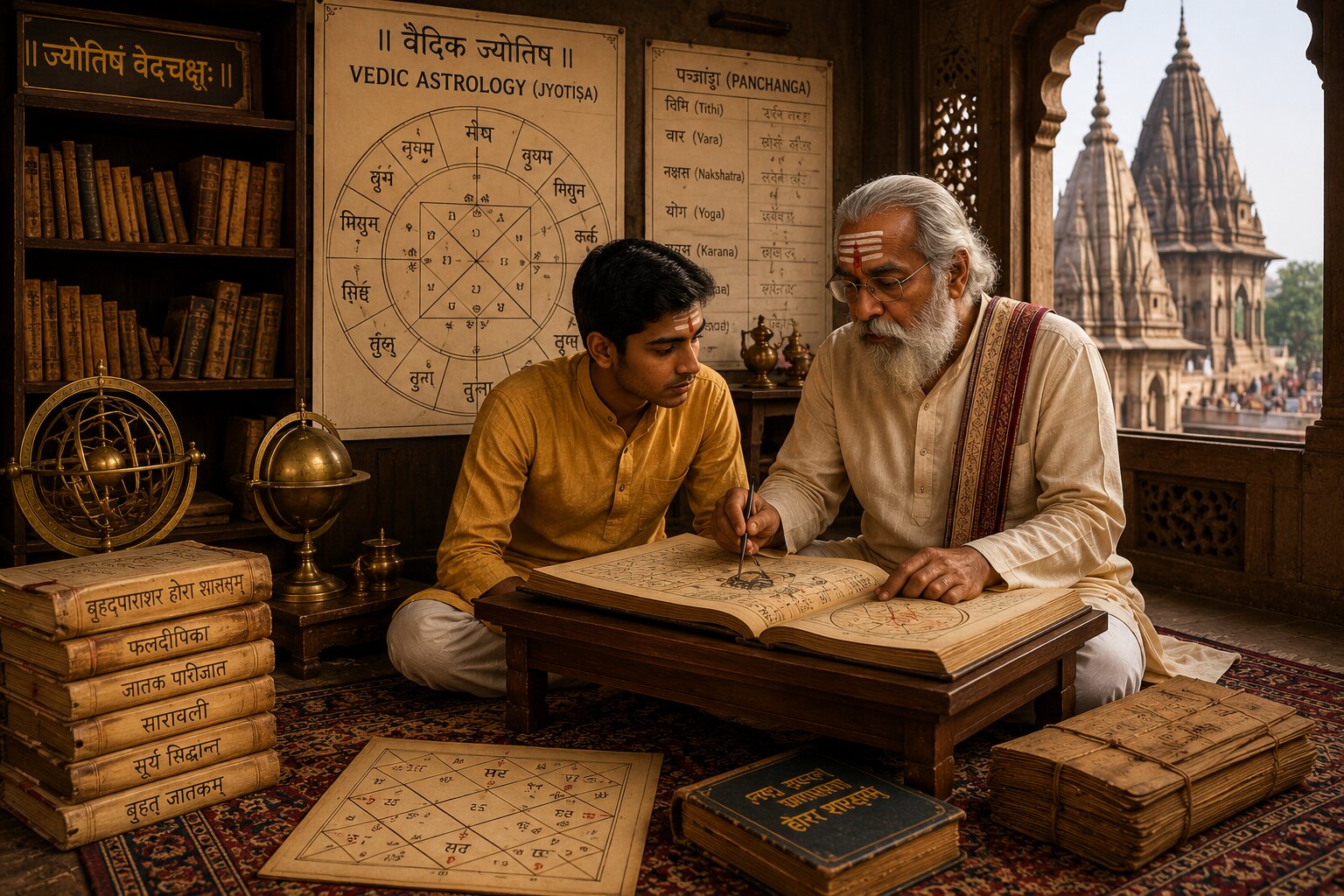
🔭 Vedic Astrology (Jyotiṣa)
Jyotiṣa, one of the six Vedāṅgas, encompasses mathematical astronomy (Gaṇita), natal astrology (Jātaka), electional astrology (Muhūrta), and calendrical calculations (Pañcāṅga), providing a framework for understanding time in ritual and cultural life.
Subjects Covered
- ✔ Vedāṅga Jyotiṣa | Panchanga Calculation | Muhūrta
- ✔ Kundali Interpretation | Nakṣatras & Grahas
- ✔ Traditional Calendrical Science | History of Indian Astronomy
Vedāṅga Tradition: ज्योतिषं वेदचक्षुः — Jyotiṣaṁ Veda-Cakṣuḥ ("Jyotiṣa is regarded as the eyes of the Veda.")