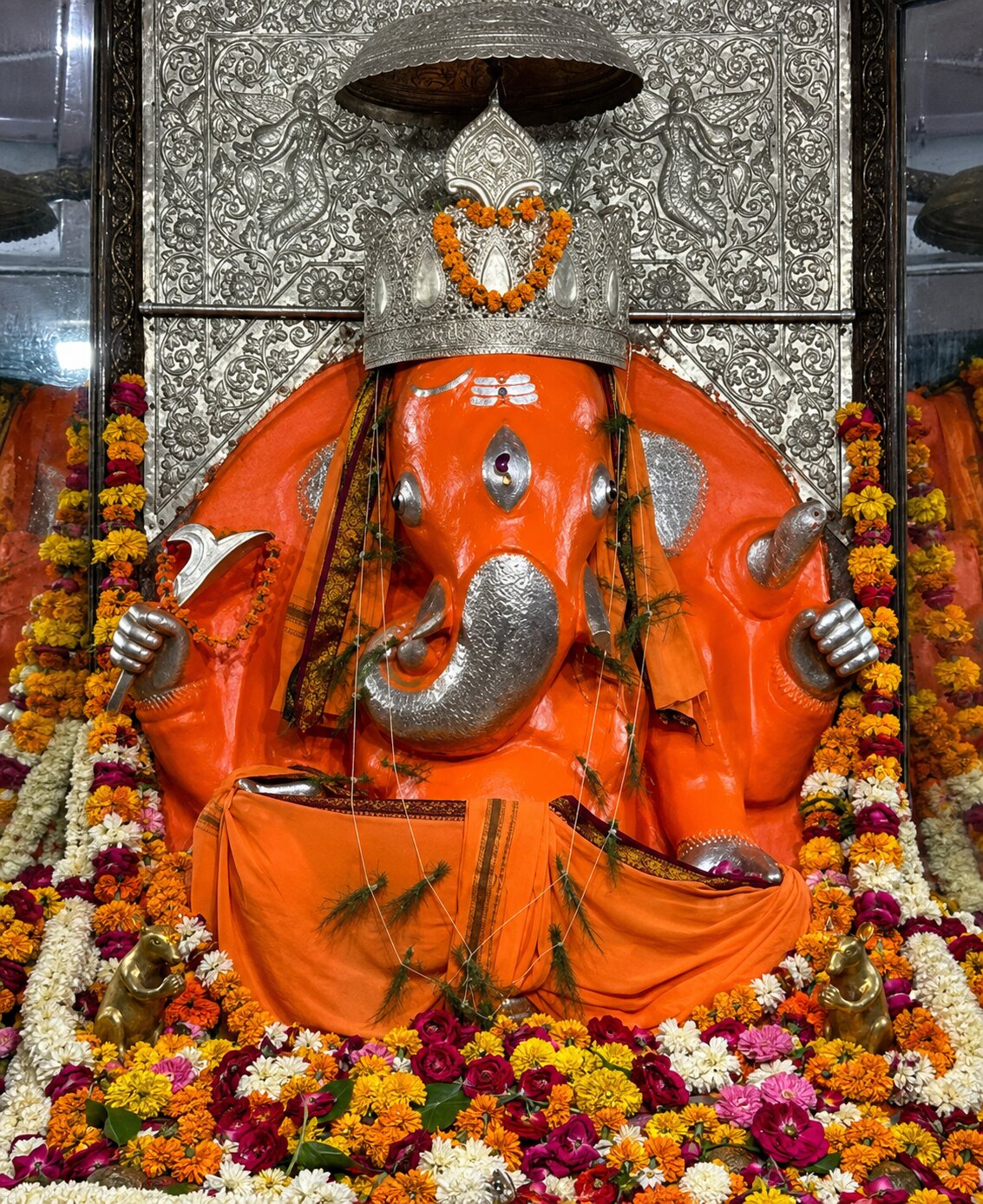
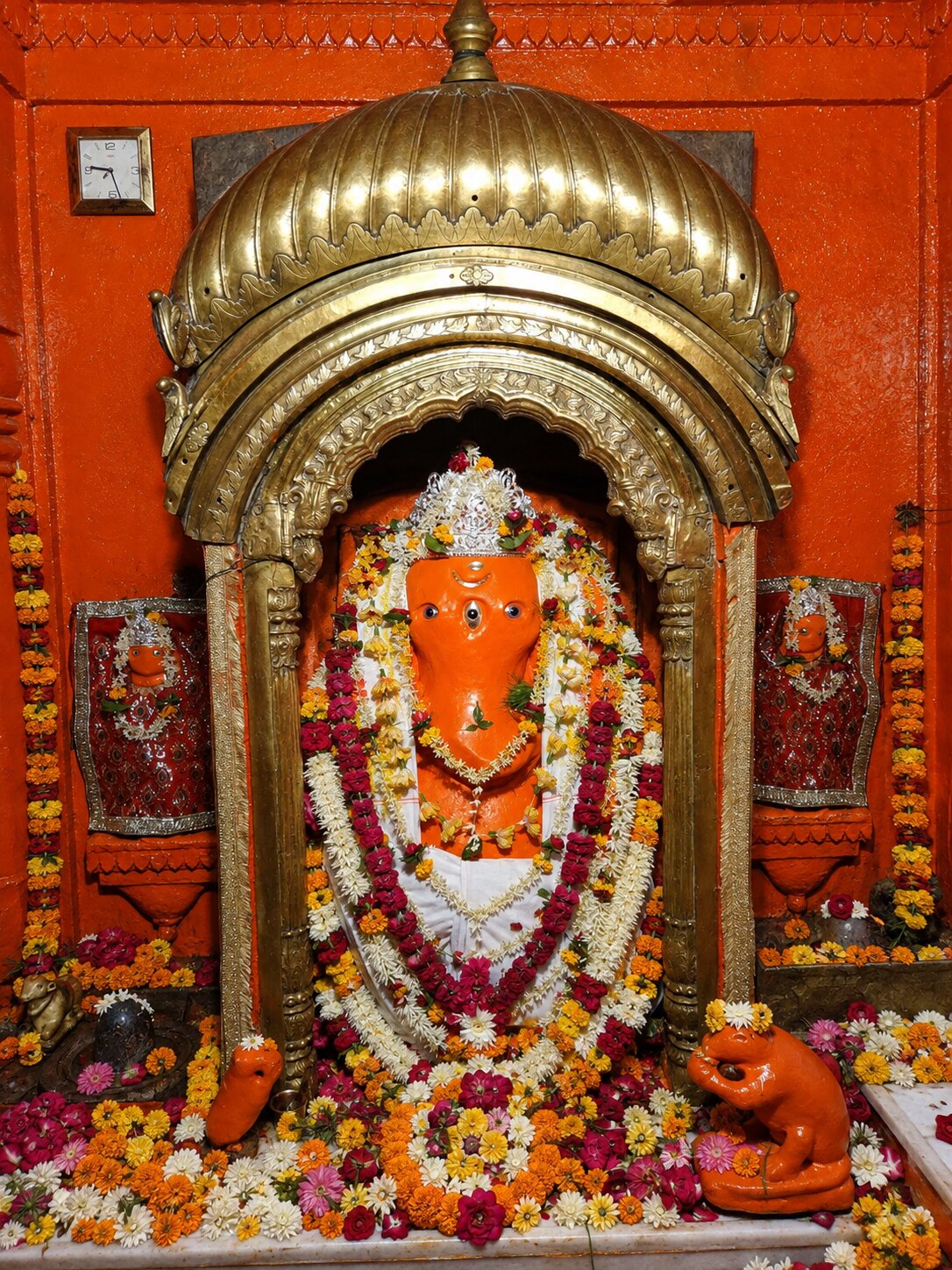
1. Siddhi Vinayak
8th of 56
Sanskrit: सिद्धिविनायक
Location:
Manikarnika Ghat area.
Traditional significance:
Siddhi represents accomplishment, attainment and spiritual
success. Siddhi Vinayak is traditionally associated with the
sacred Manikarnika area of Kashi.
Reference:
Supplied Kashi reference — listed as Siddhivinayak (8th).
2. Trisandhya Vinayak
Sanskrit: त्रिसन्ध्या विनायक
Location:
Near Lalita Ghat, adjacent to the Bhagirath Vinayak temple.
Traditional meaning:
Refers to the three daily sandhyā periods —
dawn, noon and dusk.
Reference:
Supplied Kashi reference — location near Lalita Ghat.
3. Asha Vinayak
42nd of 56
Sanskrit: आशा विनायक
Location:
Mir Ghat. The supplied reference identifies two locations:
one inside the Dharmeshwar Temple and another in the
Hanuman Temple.
Traditional significance:
Asha means hope and is traditionally
associated with hopeful and auspicious aspirations.
Reference:
Supplied Kashi reference — Asha Vinayak (42nd).
4. Kshipraprasad Vinayak
28th of 56
Sanskrit: क्षिप्रप्रसाद विनायक
Location:
Pitar Kunda (Pitr Kunda) area.
Traditional significance:
Kshipraprasad refers to one who grants grace or blessings
quickly, according to the traditional interpretation.
Reference:
Supplied Kashi reference — Kshipraprasad Vinayak (28th).
5. Dhundhiraj Vinayak
Sanskrit: ढुण्ढिराज विनायक
Location:
At the corner of the lane to the west of the Annapurna Temple.
Traditional significance:
Dhundhiraj is regarded as the central and especially
important Vinayaka of Kashi. In the Chappan Vinayak
tradition, he occupies the central position associated
with the sacred heart of Kashi.
Reference:
Supplied Kashi reference — Dhundhiraj Vinayak.
6. Avimukta Vinayak
56th of 56
Sanskrit: अविमुक्त विनायक
Location:
Small temples near the Vishwanath Temple and a location
associated with the wall behind the Gyanvapi Mosque.
Traditional significance:
Avimukta refers to the sacred identity of Kashi as the
Avimukta Kshetra, the place traditionally
regarded as never forsaken by Shiva.
Site note:
The exact present-day identification and accessibility of
this shrine should be verified locally before visiting.
Reference:
Supplied Kashi reference — Avimukta Vinayak (56th).
7. Vakratunda Vinayak / Saraswati Vinayak
17th of 56
Sanskrit:
वक्रतुण्ड विनायक / सरस्वती विनायक
Location:
Near Chousatti Ghat.
Traditional significance:
Vakratunda means “the one with the curved trunk.”
This form is traditionally associated with overcoming
obstacles and protecting devotees on the sacred path.
Reference:
Supplied Kashi reference — Vakratunda Vinayak / Saraswati
Vinayak (17th).
8. Gyan Vinayak
54th of 56
Sanskrit: ज्ञान विनायक
Location:
Inside the Langlishwar Temple in Khovabazaar.
Traditional significance:
Gyan means knowledge or wisdom.
Gyan Vinayak represents the association of Lord Ganesha
with learning, understanding and the removal of
intellectual obstacles.
Reference:
Supplied Kashi reference — Gyan Vinayak (54th).