श्री काशी देवी दर्शन
The Goddess Temples of Kashi
Six shrines of the Divine Mother along the ghats and lanes of Varanasi — their stories, their season of worship, and the Sanskrit dhyāna śloka recited before each of them.
Six shrines of the Divine Mother along the ghats and lanes of Varanasi — their stories, their season of worship, and the Sanskrit dhyāna śloka recited before each of them.
On this page
Kashi has never worshipped one Goddess alone. Alongside Vishwanath, the city holds Vishalakshi — one of the fifty-one Shaktipeethas of the subcontinent — Annapurna who feeds the whole of Kashipuri, Durga Ji, Mahalakshmi, Skandadevi, and the full circles of the Navagauris, Navadurgas, Navachandis, ten Mahavidyas and sixty-four Yoginis besides. Many older shrines have quietly dissolved into private homes over the centuries; what remains is still one of the densest concentrations of goddess worship anywhere in India.
Gathered here are six of the most important of these temples, each drawn from the Kashi Khaṇḍa of the Skanda Purāṇa and the Devī Bhāgavata Purāṇa, together with the address or ghat where the shrine still stands, and the dhyāna śloka — the meditation verse — traditionally offered before her image.
Shaktipeetha No. 5 of the Nine Gauris
श्री विशालाक्षी शक्तिपीठ
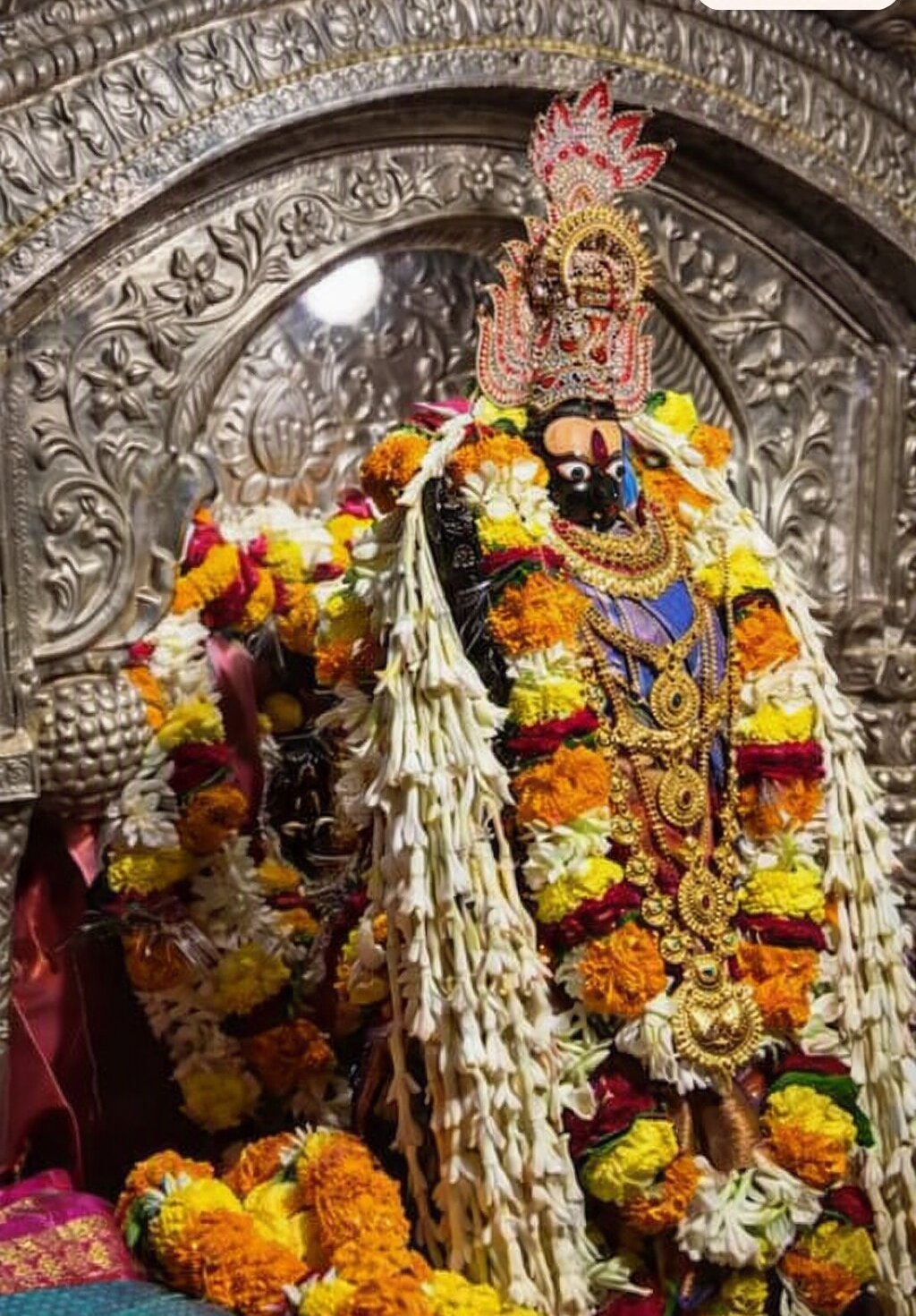
When grief-maddened Shiva carried Sati's body across the cosmos, Vishnu's discus cut it into pieces that fell to earth as Shaktipeethas — seats of the Goddess's living power. At Kashi it was her karna-kundala, ear and earring, that touched the ground beside what is now Manikarnika Ghat, and the temple raised over the spot became one of the fifty-one — in some countings fifty-two — Shaktipeethas of the subcontinent. Her guardian Bhairava here is Kala Bhairava, and Kashi Vishwanath himself, the texts say, rests close by to console the goddess in her grief and, through her, to grant relief to anyone worn down by the world.
Two images share the sanctum: a small, very old black-stone Adi Vishalakshi set slightly behind, and a larger murti placed in front of her — positioned with such care that a devotee standing at the right spot can see both faces at once, an alignment every priest here is quick to point out. The temple that stands today, with its South Indian gopuram rising over a narrow Banaras lane, was rebuilt in 1893 by the Nattukottai Nagarathar merchant community of Tamil Nadu, giving Vishalakshi a Dravidian silhouette found nowhere else on this stretch of the Ganga.
Vishalakshi — "the wide-eyed one" — is counted the fifth of Kashi's Navagauris and is named first among the goddess's hundred and eight seats listed in the Devi Bhagavata. Even a small offering here, the Kashi Khand promises, returns boundless fruit; worship is held to bring both beauty (saundarya) and wealth (lakshmi) to the sincere devotee. She is one of only three sister-shrines — with Kamakshi of Kanchipuram and Meenakshi of Madurai — regarded as the great "eyed" goddesses of the subcontinent.
वाराणस्यां विशालाक्षी देवता कालभैरवः ।
मणिकर्णीति विख्याता कुण्डलं च मम श्रुतेः ॥
vārāṇasyāṃ viśālākṣī devatā kālabhairavaḥ, maṇikarṇīti vikhyātā kuṇḍalaṃ ca mama śruteḥ
"At Varanasi is Vishalakshi, whose guardian deity is Kala Bhairava; famed as Manikarni, for it is heard that her earring fell here."
Shaktipeetha stotra tradition · Kashi Khand 70.4–17
Queen of Kashi · Mahagauri, 8th Navadurga
काशीपुराधीश्वरी भगवती श्री अन्नपूर्णा
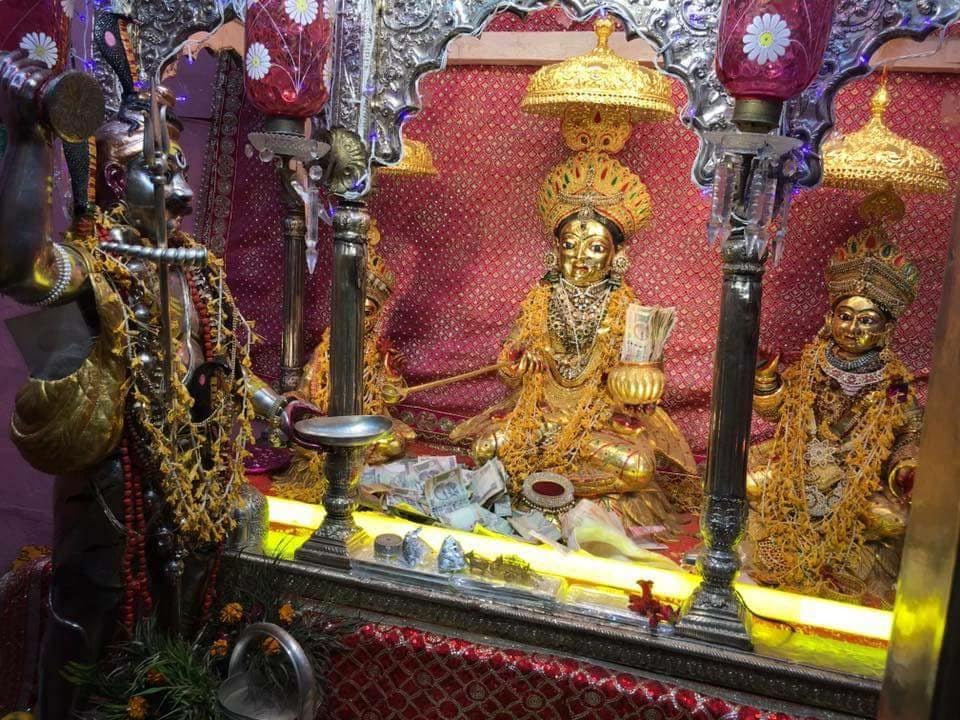
The story told at the temple begins in play: Parvati once covered Shiva's three eyes with her hands, and in that instant of darkness the whole world lost its food along with its light. To restore both, she came to Kashi as Annapurna, bearing a golden ladle and a vessel that never emptied, and fed the city herself — regaining, in the act, her own radiant Gauri form. Shiva is shown, in the temple's central image, holding out a beggar's bowl to his own consort, a scene of the Lord of the Universe humbled before the Goddess of Food. The present sanctuary was raised around 1725–29 by the Maratha Peshwa Baji Rao I on a far older foundation destroyed in earlier invasions.
Because Annapurna sustains and nourishes every resident of the city, she is spoken of as its true sovereign — "Kashipuradhishvari" — with Vishwanath himself as her consort-king; it is said that under her watch, no one in Kashi has ever gone to sleep hungry. She is worshipped daily, but her Navratri darshan on Chaitra Shukla Ashtami — when she is honoured as Mahagauri, eighth of the Navadurgas — carries special weight, and Adi Shankaracharya is traditionally held to have composed his Annapurna Stotram at this very shrine.
From Dhanteras to Annakut — the day after Diwali — the temple's solid-gold image is shown to the public for the only days of the year it leaves the sanctum, and coins together with grains of rice are distributed as prasad to crowds that can stretch for streets.
चैत्राष्टम्यां महायात्रां भवान्याः कारयेत्सुधीः ।
अष्टाधिकाः प्रकर्तव्याः शतकृत्वः प्रदक्षिणाः ॥
caitrāṣṭamyāṃ mahāyātrāṃ bhavānyāḥ kārayet sudhīḥ, aṣṭādhikāḥ prakartavyāḥ śatakṛtvaḥ pradakṣiṇāḥ
"On Chaitra Ashtami let the wise perform Bhavani's great pilgrimage: one hundred and eight circumambulations — by which the whole seven-continented earth, with its mountains, oceans, hermitages and forests, is circled all the same; the devoted should complete eight pradakshinas every day besides."
Kashi Khand 61.126–128
9th and final Navagauri · Siddha Peetha
श्री महालक्ष्मी गौरी
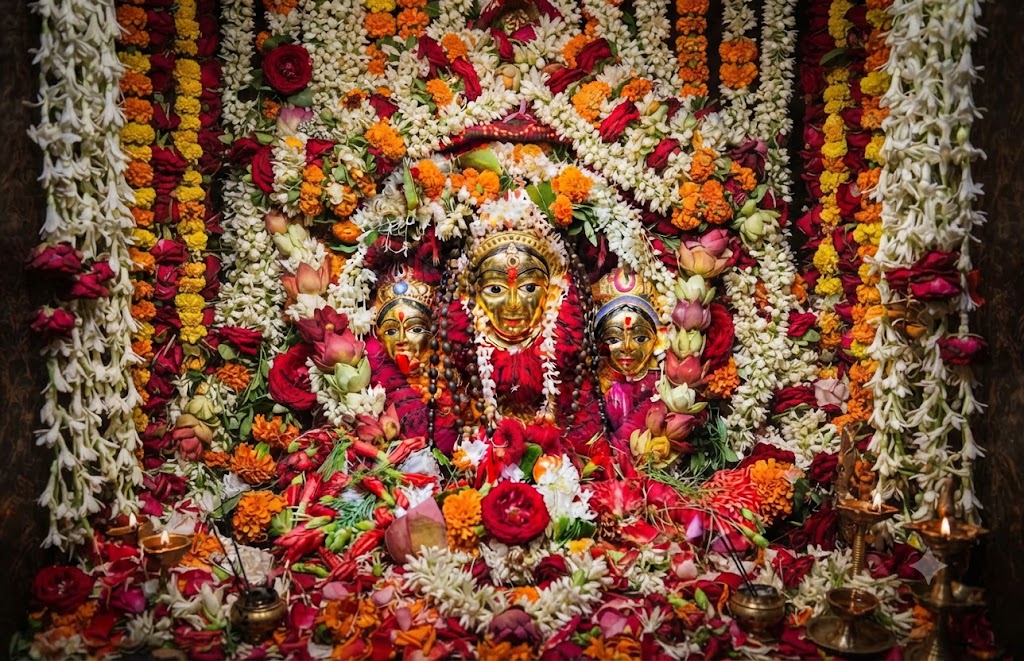
The Kashi Khand devotes an entire chapter to this one neighbourhood, calling it a Paramsiddhi-pada Mahapeetha — a great seat where every spiritual attainment ripens — and declaring flatly that no other seat in the city grants wealth as completely as Mahalakshmi's. The sacred tank that gives the locality its name, Lakshmi Kund, lies just below and behind the shrine; bathing there before darshan, and performing rites for one's ancestors and gifts for the needy, is prescribed to keep prosperity in a household for life. Two lesser-known goddesses named in the same chapter, Shikhi-Chandi and Mayuri, stand to the rear and at the entrance of the temple complex.
Mahalakshmi closes the sequence of Kashi's nine Navagauris, worshipped on the ninth and final day of the Vasantik (Chaitra) Navaratri. Every year from Bhadrapada Shukla Ashtami to Ashwin Krishna Ashtami, the sixteen-day Sorahiya Mela fills the lanes around the kund — a fair as well known today for its traditional hand-thrown clay pottery as for its religious rites, and for the Jiutputrika (Jivitputrika) vrata during which mothers fast for the long life of their sons.
नमस्तेऽस्तु महामाये श्रीपीठे सुरपूजिते ।
शङ्खचक्रगदाहस्ते महालक्ष्मि नमोऽस्तुते ॥
namaste'stu mahāmāye śrīpīṭhe surapūjite, śaṅkha-cakra-gadā-haste mahālakṣmi namo'stute
"Salutations to you, Great Maya, enthroned at the seat of Shri and worshipped by the gods; bearer of conch, discus and mace in your hands — Mahalakshmi, I bow to you."
Mahalakshmyashtakam, verse 1 (Padma Purana) · Kashi Khand 70.63–67
Badi Durga · Kushmanda, 4th Navadurga
श्री दुर्गा जी (कूष्माण्डा दुर्गा), दुर्गाकुण्ड
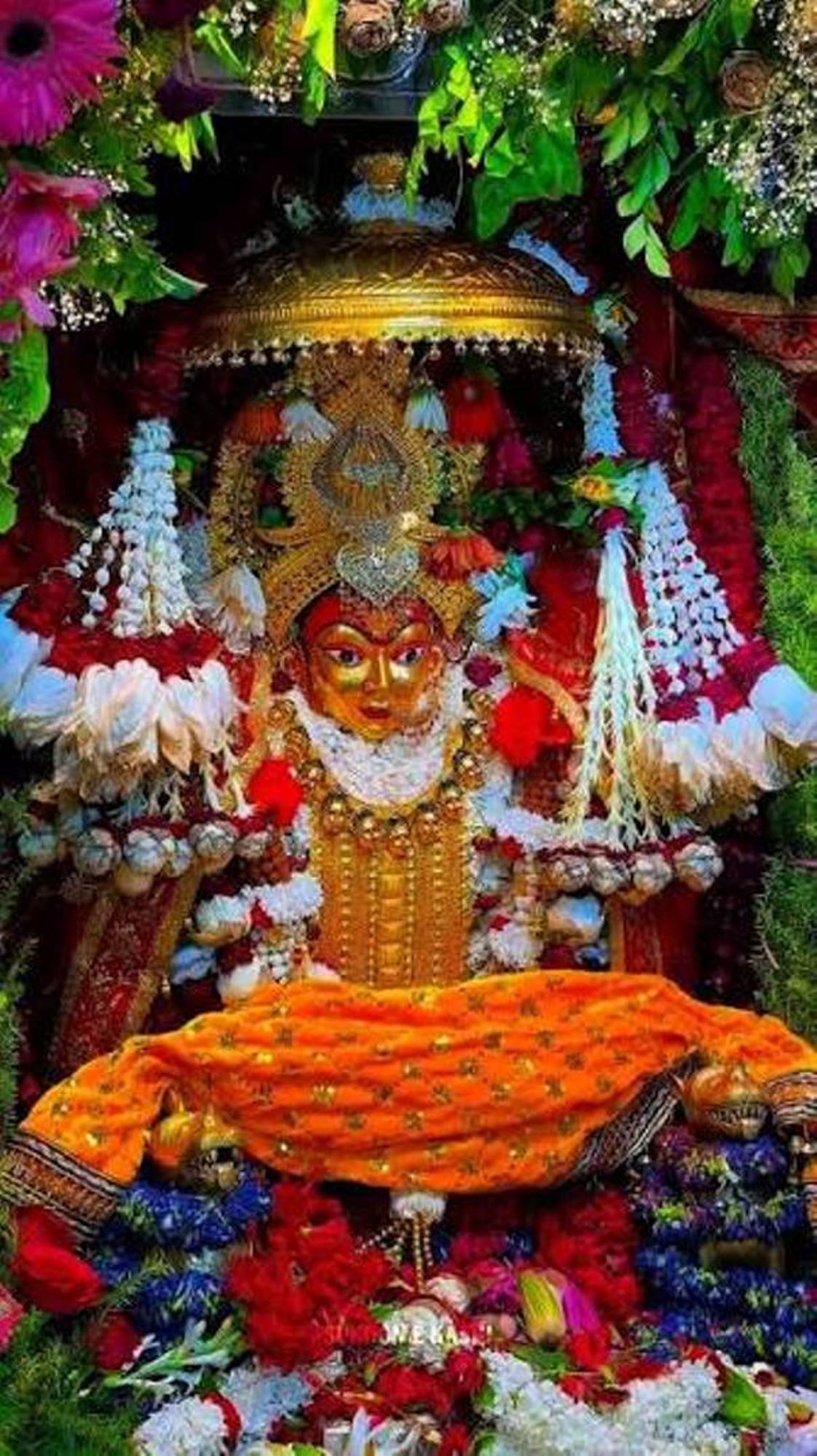
The Devi Bhagavata Purana tells of Subahu, king of Kashi, whose daughter Shashikala dreamed of marriage to Sudarshana, a solar-dynasty prince exiled from Ayodhya. When rival kings gathered in fury at the match, Bhagavati blazed into the sky over the battlefield and struck the challengers down herself. Subahu, overwhelmed with gratitude, begged the Goddess to make his capital her permanent home; she answered that she would remain "as long as this creation stands," and has been worshipped here ever since. The image in the sanctum is held to be swayambhu — self-manifest, not carved by human hands.
Kashi knows her here as Kushmanda, fourth of the Navadurgas, said to have breathed the universe into being with nothing more than a smile, and simply as Badi Durga, "Elder Durga" — one of the most jagrat, spiritually wakeful, seats of the Goddess in the city. The present red-sandstone temple, raised in the Nagara style around 1760 by Rani Bhabani of Natore in Bengal, gained the nickname "Monkey Temple" among nineteenth-century visitors for the troupes that still live in its courtyard. Durgakund also marks one corner of Kashi's Shakti-Trikona, described further below.
सुरासम्पूर्णकलशं रुधिराप्लुतमेव च ।
दधाना हस्तपद्माभ्यां कूष्माण्डा शुभदास्तु मे ॥
surāsampūrṇa-kalaśaṃ rudhirāplutam eva ca, dadhānā hasta-padmābhyāṃ kūṣmāṇḍā śubhadāstu me
"Bearing in her lotus hands a vessel filled to the brim and steeped in the red of sacrifice — may Kushmanda ever grant me her blessing."
Kushmanda mool mantra, recited on Navaratri's fourth day
जय दुर्गे! महादेवि! जय काशीनिवासिनि!
क्षेत्रविघ्नहरे देवि! पुनर्दर्शनमस्तु ते ॥
jaya durge mahādevi, jaya kāśīnivāsini, kṣetra-vighnahare devi, punardarśanam astu te
"Victory to Durga, Great Goddess! Victory to her who dwells in Kashi, remover of every obstacle of this sacred land — grant, O Goddess, that I may see you again."
Recited by devotees on leaving the shrine · Kashi Khand 72.81–88
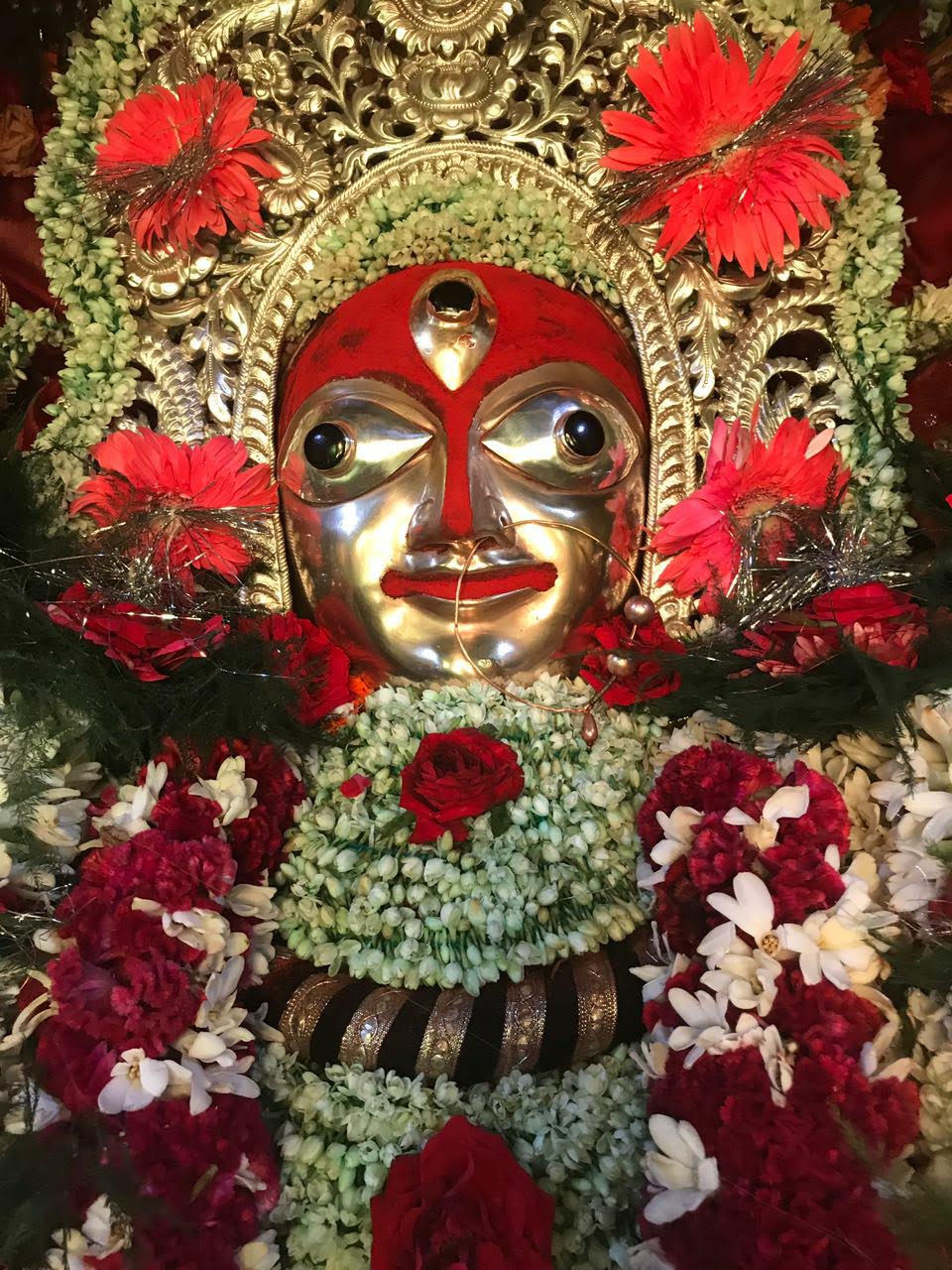
Vikata-Matrika · "Goddess of Remedy"
श्री संकटा देवी
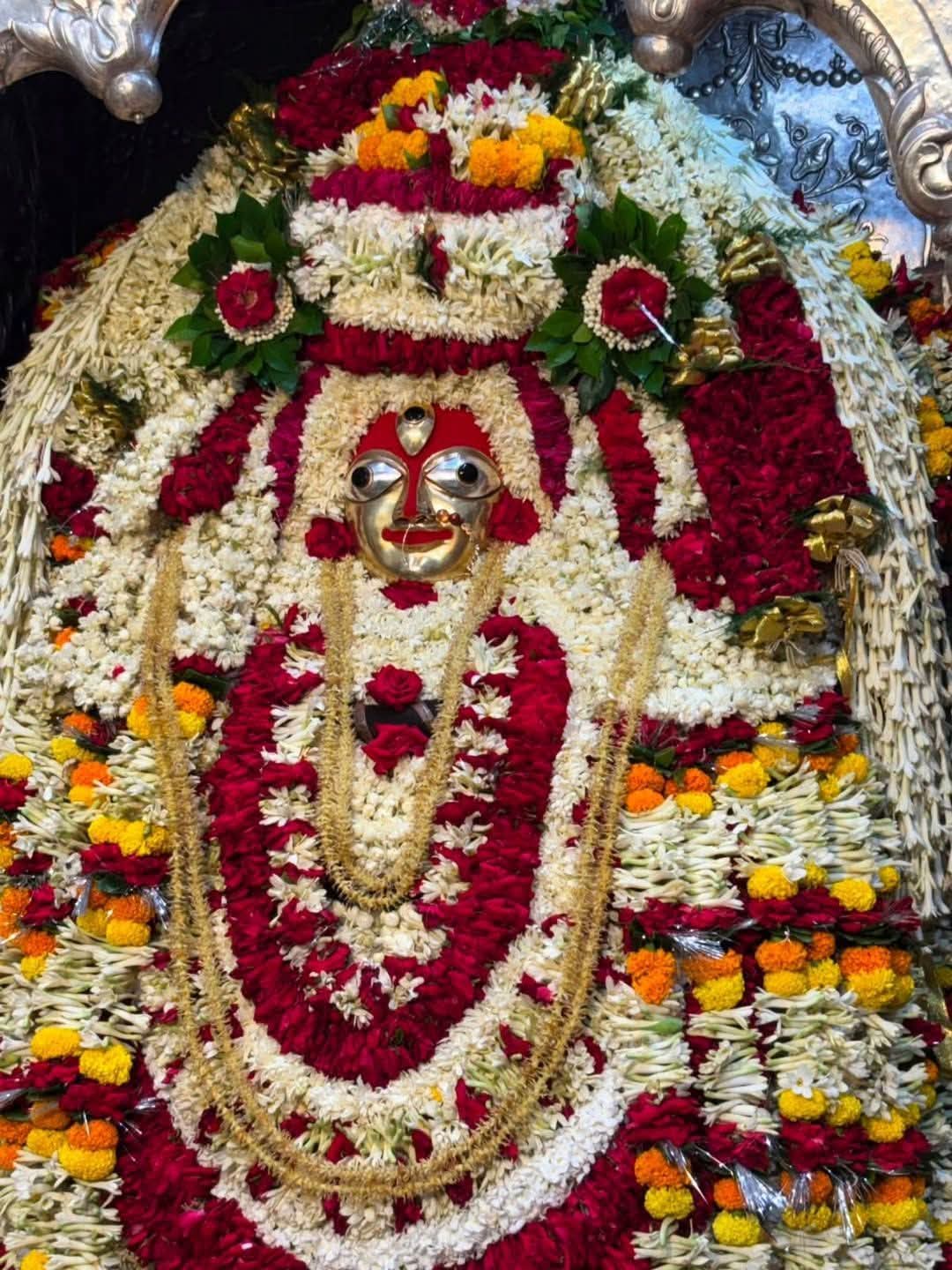
The Padma Purana places this shrine within Anandavan, Kashi's ancient sacred forest, at a spot called the Padmamudra-Peetha — north of the Vireshwar Mahadev shrine and east of Chandreshwar. Temple tradition traces her presence here to the exile of the Pandavas: stripped of their kingdom and worn down by hardship, they came to Kashi, and on the counsel of the sage Markandeya, Yudhishthira performed a special worship of Sankata Devi, after which their fortunes began to turn. Other local accounts instead trace the shrine to Shiva's own grief after Sati's death — as with much of Kashi's older devotional geography, the layers of story have folded into one another over centuries, and both are still told at the temple today.
As Vikata-Matrika, "the fierce mother," she carries eight names in temple tradition — Sankata, Vijaya, Kamada, Duhkhaharini, Sharvani, Katyayani, Bhimanayana, and Sarvarogahara, "destroyer of every disease" — and is counted among the Matrikas who once fought beside Devi against the demons Shumbha and Nishumbha. Unusually for a Kashi goddess shrine, devotees are permitted to touch her feet directly. The present temple, with its silver-masked, self-manifest image flanked by Hanuman and Bhairava beneath an old banyan tree, was raised by the King of Baroda in the eighteenth century alongside the ghat that bears her name.
सर्वमङ्गलमाङ्गल्ये शिवे सर्वार्थसाधिके ।
शरण्ये त्र्यम्बके गौरि नारायणि नमोऽस्तुते ॥
sarva-maṅgala-māṅgalye śive sarvārtha-sādhike, śaraṇye tryambake gauri nārāyaṇi namo'stute
"O source of all auspiciousness, gracious one who accomplishes every purpose, refuge of all, three-eyed Gauri, Narayani — salutations to you." No single ancient dhyana verse survives for Sankata Devi alone; this is the refuge-verse most often offered to her as remover of sankat, danger.
Devi Mahatmyam (Durga Saptashati)
Skandamata form · Twenty-armed Gauri
श्री विश्वभुजागौरी
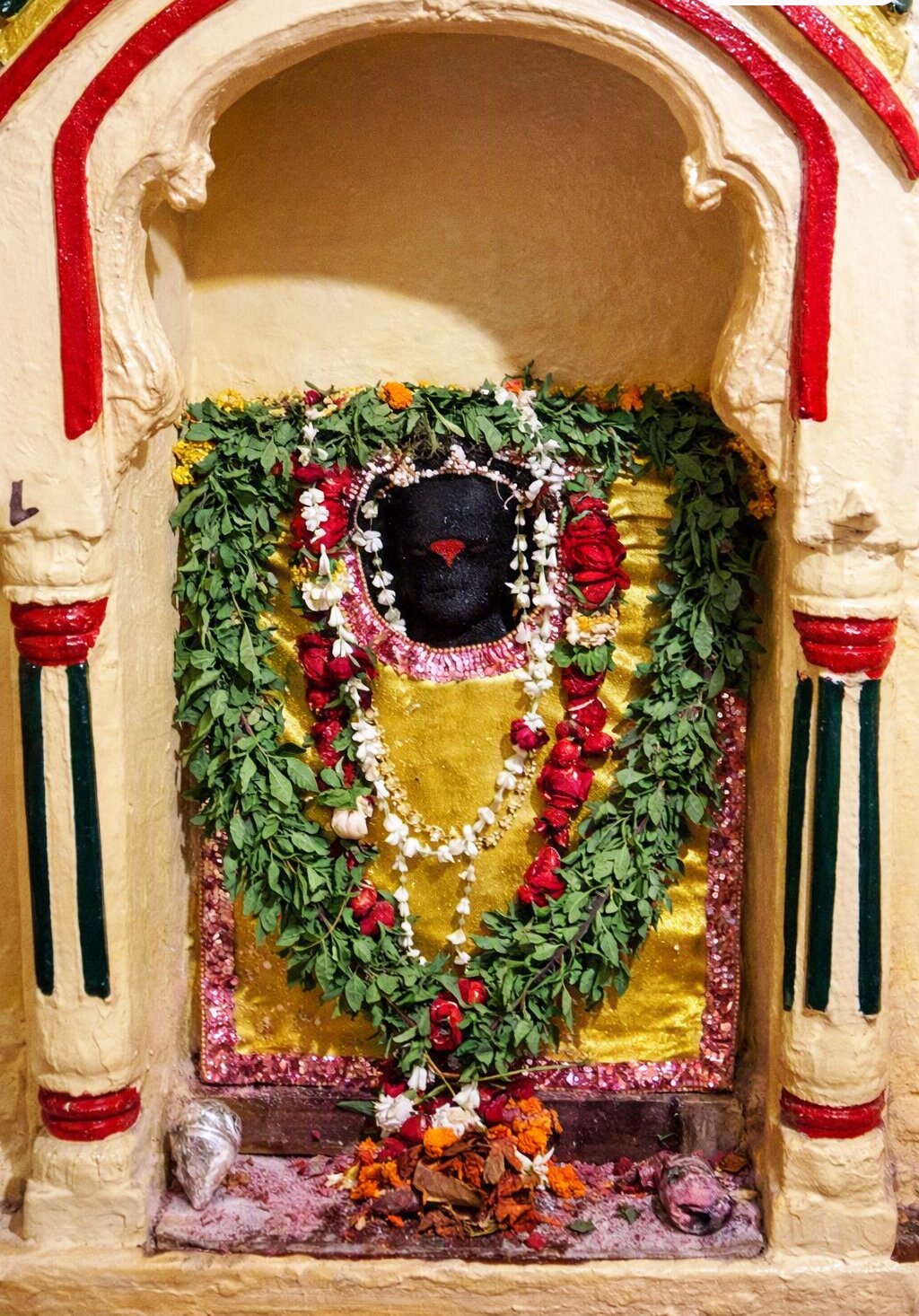
A short walk from the Vishalakshi Shaktipeeth, facing the ancient well called Dharmakupa, stands a far quieter shrine to Gauri in her form as Skandamata — mother of Skanda, the war-god Kartikeya. Here she is called Vishvabhujagauri, "the twenty-armed Gauri," for the sheer number of hands with which tradition says she reaches toward her devotees to grant their wishes and clear away their greatest obstacles. A daily pilgrimage to this temple is prescribed through the whole of Ashvin's Sharadiya Navaratri.
Her most celebrated observance is a vow called Manoratha-Tritiya, kept on the Tritiya of the bright fortnight every month from Chaitra to Phalguna. The Kashi Khand credits this very vrata with a chain of mythic marriages and blessings: performed first by Shachi, wife of Indra, to win her desired husband, and later by Lakshmi to obtain Vishnu, by Arundhati to obtain the sage Vashistha, and by Anasuya to obtain the sage Atri — while Suniti is said to have won her devoted son Dhruva by the same rite.
In her Vagishvari (Mahasarasvati) aspect, Vishvabhujagauri also anchors the third point of Kashi's Shakti-Trikona, in the Jaitpura quarter, where her very old image sits inside a brick cave beneath a modest shrine — see below.
सिंहासनगता नित्यं पद्माश्रितकरद्वया ।
शुभदास्तु सदा देवी स्कन्दमाता यशस्विनी ॥
siṃhāsanagatā nityaṃ padmāśrita-karadvayā, śubhadāstu sadā devī skandamātā yaśasvinī
"Ever seated upon her throne, her two hands resting upon lotuses — may the glorious, radiant Goddess Skandamata be ever gracious."
Skandamata mool mantra · Kashi Khand 70.22–25, 80.1–85
A geography of power
Three tanks, three forms of the Goddess, one triangle drawn across the old city — Durga, Mahalakshmi and Vagishvari, each holding the other two in miniature within her own sanctum.
Kashi Khand ties each of these three great Shaktipeethas to its own holy tank. At Durgakund, the central image of Durga (Mahakali) shares her temple with images of Mahalakshmi and Mahasaraswati set into the same corners; at Lakshmikund, Mahalakshmi presides while Mahakali and Mahasaraswati stand beside her; and at Jaitpura, the very old image of Vagishvari — Mahasarasvati — rests inside a brick cave beneath a modest shrine. Durga Kund and Lakshmi Kund still hold water today. Vagishvari Kund does not: it was filled in and built over around 1875, and houses and a lane now stand where the third tank of the triangle once was.