← Kashi Guide Home
The Descent of the Divine River

Ganga Dussehra in Kashi

An intricate guide to the history, astronomical significance, and profound cleansing rituals during the day Goddess Ganga reached the Earth.

The Origin Mythos

History and the Auspicious Day

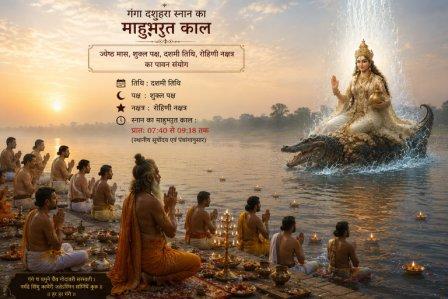
Ganga Dussehra falls on the tenth day (Dashami) of the waxing moon in the Hindu month of Jyeshtha (May/June). It marks the exact cosmic timeline when Goddess Ganga descended from Heaven to Earth. Through thousands of years of intense penance, King Bhagiratha successfully prayed for her arrival to purify the cursed ashes of his ancestors. To prevent her mighty current from shattering the planet, Lord Shiva caught her waters safely within his matted hair, gently releasing her into streams.

Devotees gathering at the banks of the Ganga during twilight Spiritual Value

The Destruction of Ten Sins

"Dussehra" comes from *Dasha* (ten) and *Hara* (destroy). It is believed that celebrating on this day clears ten distinct, heavy negative karmas: three related to physical acts, four belonging to speech, and three residing deep within mental thoughts.

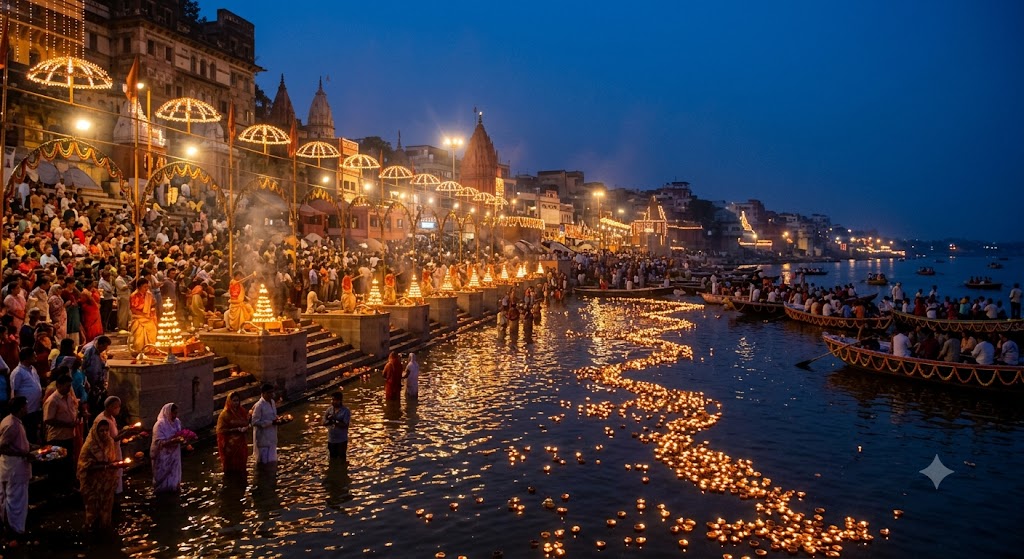
Dashashwamedh Ghat illuminated beautifully for Ganga Dussehra Cosmic Calendar

Auspicious Muhurta

The day features a unique astrological lock combining the Jyeshtha month, Shukla Paksha, Dashami Tithi, and the Rohini Nakshatra. Performing rituals under this specific alignment is thought to multiply spiritual merits exponentially.

A grand evening Ganga Aarti celebration with large oil lamps Evening Spectacle

The Maha Ganga Aarti

As sunset approaches, Dashashwamedh Ghat becomes the site of a spectacular larger-scale Aarti ceremony. Multiple priests move massive, tiered brass oil lamps in synchronized patterns, accompanied by booming conch shells and Vedic chants.

The Supreme Purifying Ritual

The Sacred Snan (Holy Bath) Description

The Ritual of Water

The Holy Dip Process & Tradition

Taking a holy bath (Snan) in the Ganga during this festival is the central act of devotion. Millions of pilgrims crowd the stone stairs starting at 3:00 AM during the Brahma Muhurta.

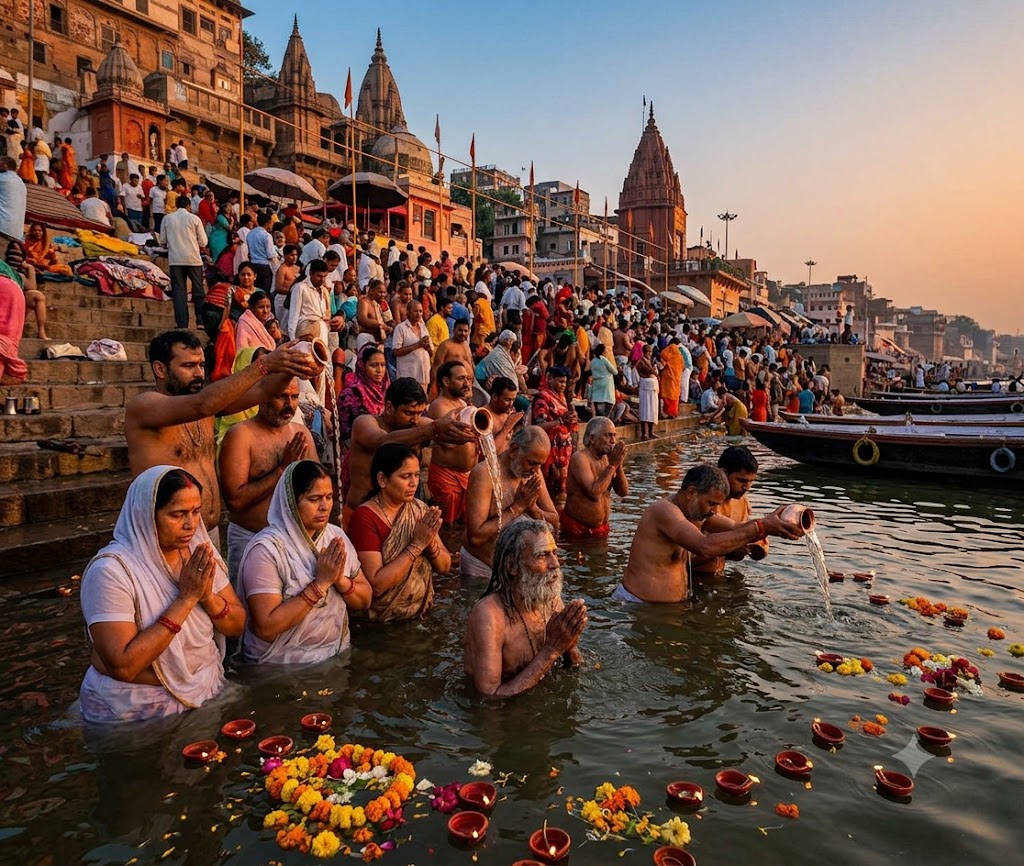
Devotees submerge themselves completely three times while reciting prayers to Lord Shiva and Mother Ganga. Following the bath, they offer *Arghya* (pouring river water from copper vessels back into the current) along with fresh flowers, deep-red clay lamps, and sweets.

Many pilgrims fast through the daytime hours and distribute cold traditional melon juice and refreshing drinks to others along the crowded pathways to celebrate the life-giving nature of water.

Pilgrims offering prayers while taking a holy dip in the river

Pilgrim Advisory Matrix

Critical Safety & Planning for Ganga Dussehra

Summer temperatures combined with heavy crowd surges create challenging conditions. Review these guidelines to ensure a safe experience.

Weather Advice

Managing Mid-Summer Heat

Since Ganga Dussehra occurs in May or June, the afternoon heat in Varanasi can easily cross 40°C. Complete your outdoor holy dips before 8:30 AM. Carry ample electrolyte hydration packs and wear breathable clothing to avoid heat exhaustion.

River Safety

Understanding River Current & Depths

The river depth drops abruptly near certain ghats. Always stay within the designated safety chains and wooden barricades set up by local authorities. Avoid swimming into mid-stream channels where hidden underwater currents are highly dangerous.

Logistics

Boat Safety & Evening Viewing

If booking a wooden boat to witness the grand evening decorations, verify that life jackets are explicitly provided onboard. Secure your boat booking early in the afternoon, as prices spike dramatically close to the evening Aarti hours.